
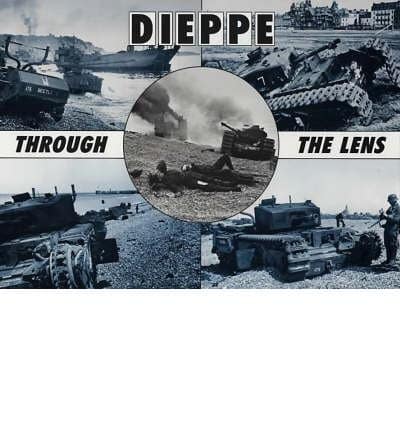
DIEPPE Through the Lens of the German War Photographer
Original price was: £12.95.£3.99Current price is: £3.99.
Another well researched book from the After the Battle publishers. This book give’s good detail on the final position’s of all of the tanks and also details the other vehicle’s and tactic’s used. This is an excellent photo essay of the raid, with useful information on the Calgary Tanks.
In stock
Description
The 14th Canadian Army Tank Regiment was one of the first Canadian armoured regiments to be formed and was also the first to be committed to battle. The action of every one of the regiment’s tanks that landed at Dieppe is described in detail by Hugh G. Henry Jr who has spent several years on his research and interviewed all the regiment’s survivors. Every Churchill tank and armoured car left behind on the beach is pictured, selected from photographic coverage of the time. In addition, annotated aerial photographs by Jean Paul Pallud pinpoint and identify the position of every vehicle and full crew lists are given for each. The result is a uniquely illustrated “after-action” report of Canada’s worst military defeat.
As the tanks came to shore on the beach at Dieppe, they were not only brought to a halt by German fire, but found themselves immobilised due to the rough condition of the shingle banks and seawall. Despite this fact, the immobilised Calgary Tanks continued to support the infantry and managed to withdraw many soldiers from the battle. In the end, however, most of the tank crews were either captured as prisoners of war or died in action. The raid at Dieppe proved fatal for some 13 soldiers of the Calgary Regiment, two of which were officers. Thirty-three others were wounded, and 138 taken prisoner.
After the raid on Dieppe, The 14th Army Tank Regiment (The Calgary Regiment (Tank)) went into history as the first tank regiment of the Canadian Army to go into battle with the enemy as well as the first engaged in amphibious assault during the Second World War.
Additional information
| Author/Editor | Hugh G Henry Jr & Jean Paul Pallud |
|---|---|
| Product Code | 31727 |
| Delivery | This item is usually dispatched Next Day |
| Format | Hardback 64 pages wit 71 illustrations Dimensions : 30.5 x 21.6 cm |
| ISBN | 9780900913761 |
You may also like…


