
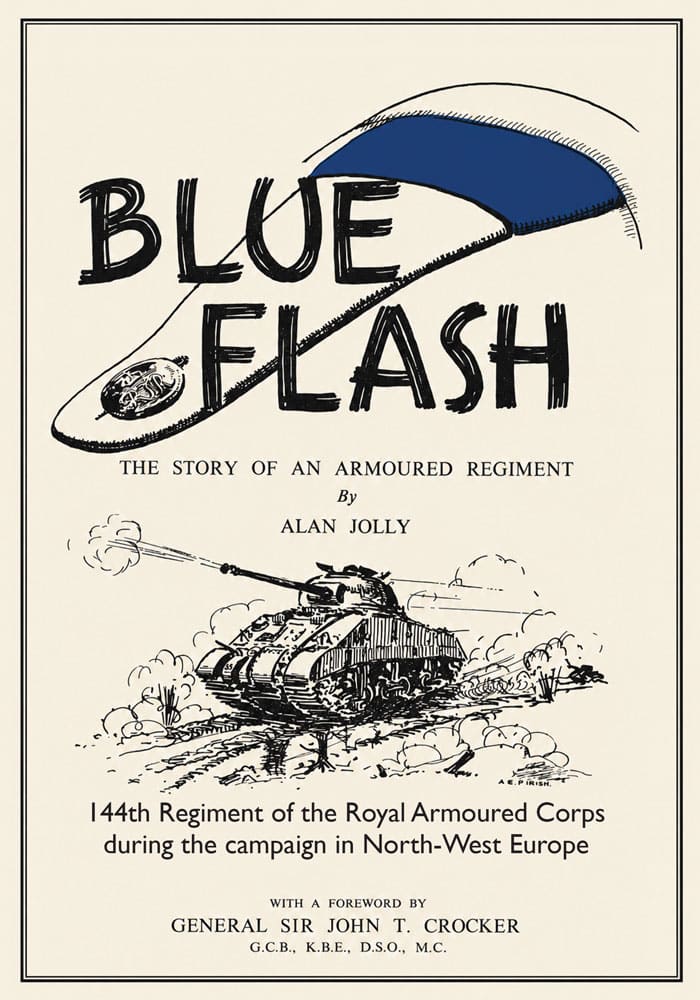












BLUE FLASH The Story of an Armoured Regiment – 144th Regt. Royal Armoured Corps:During the campaign in North-West Europe 1944-45
Price range: £18.99 through £28.99
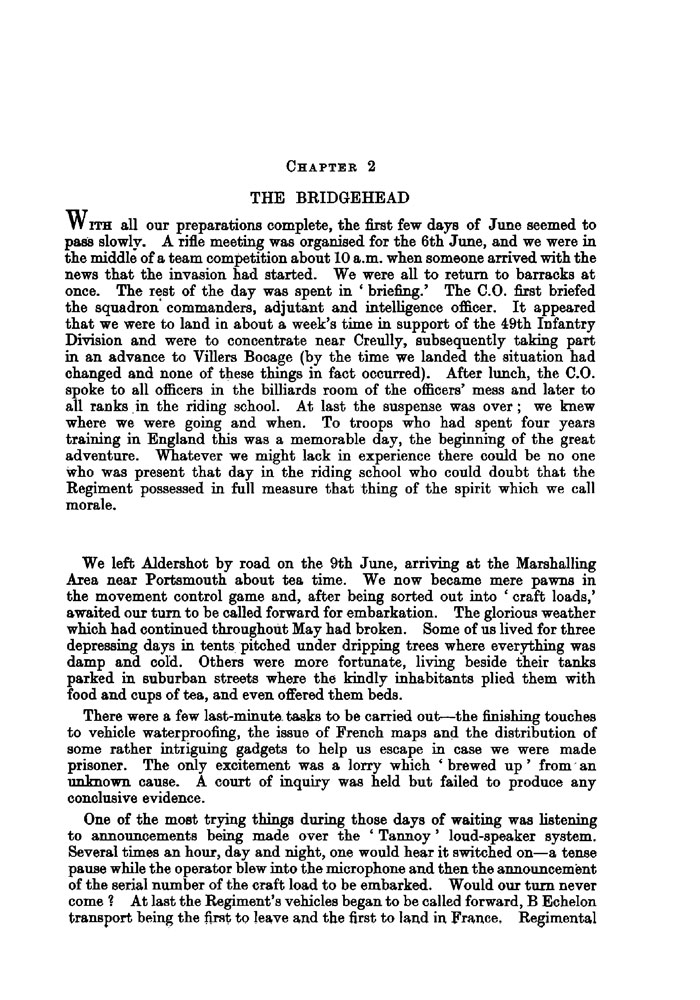
A regimental history documenting the wartime experience of the 144th Regiment of the Royal Armoured Corps during the campaign in North-West Europe in the Second World War. The work provides a firsthand operational account from the regiment’s arrival in Normandy following the Normandy landings,disembarking at Gold Beach on 14 June 1944,through the final Allied advance into Germany in 1945.
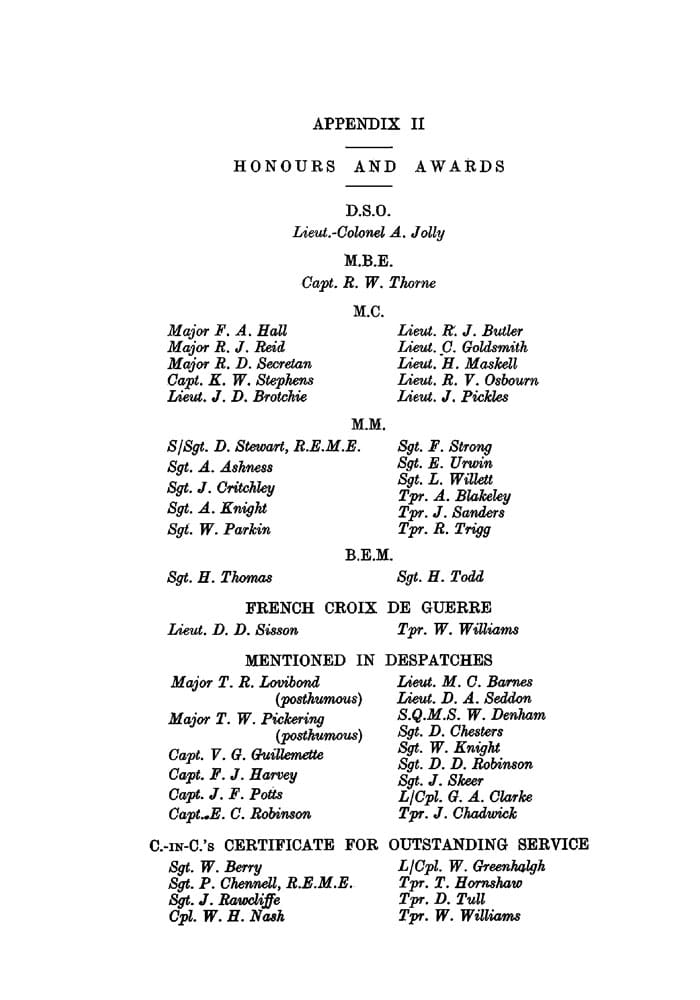
Originally formed in 1940 as the 8th Battalion of the East Lancashire Regiment before conversion to armoured service, the unit was redesignated the 4th Royal Tank Regiment on 1 March 1945. Jolly’s narrative offers detailed descriptions of key operations including Operation Pomegranate, Operation Totalize, Operation Astonia, and the Rhine crossing during Operation Plunder. The work is particularly valuable as a primary source on British armoured tactics, combined-arms co-operation with formations such as the 51st (Highland) Infantry Division, and the regiment’s evolving operational role—from conventional tank support to specialised amphibious transport using Buffalo LVT vehicles. As both a participant narrative and regimental chronicle, Blue Flash remains a significant documentary record of British armoured warfare in the final year of the European campaign. A Roll of Honour and Awards completes this history.
Description
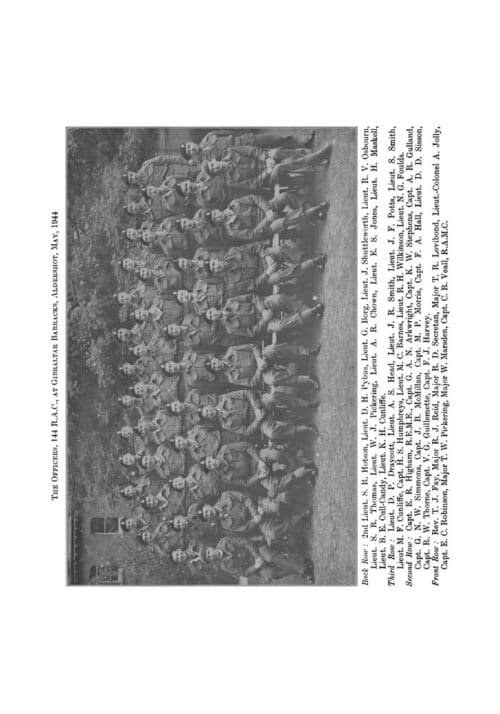
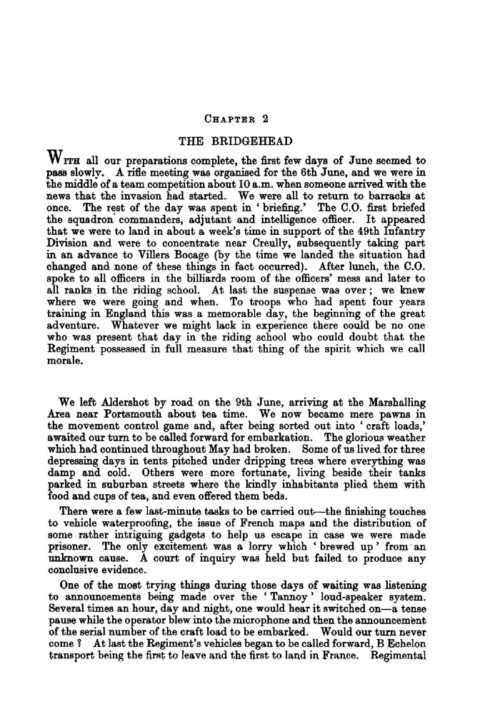
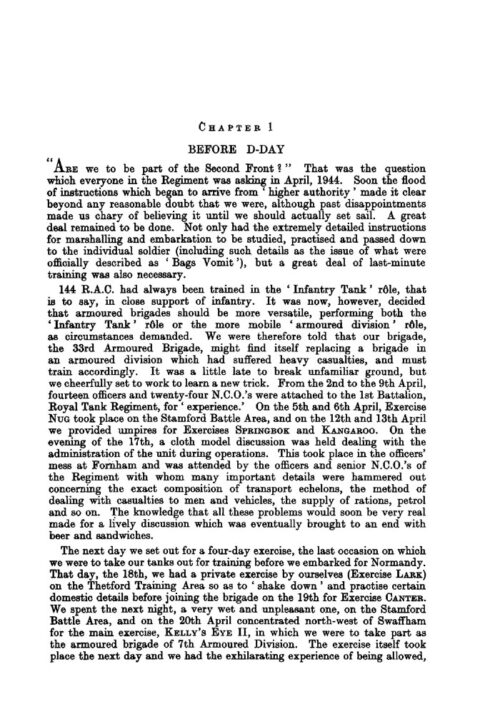
Blue Flash is the regimental history written by Alan Jolly who assumed command of the regiment in April 1944. First privately printed in 1952 the work chronicles the regiment’s wartime experience from its landing in Normandy to the final campaigns in north-west Europe.
The narrative begins with the regiment’s arrival in France after the Normandy landings, when it disembarked on Gold Beach on 14 June 1944. From this point, the book traces its operational record through the closing phases of the Second World War, providing a detailed firsthand account of armoured warfare in the European theatre.
Regimental Background
The unit began life in 1940 as the 8th Battalion of the East Lancashire Regiment before conversion to the Royal Armoured Corps, where it became the 144th Regiment Royal Armoured Corps. On 1 March 1945 the formation was redesignated as the 4th Royal Tank Regiment, restoring the lineage of one of Britain’s original tank regiments.
The title Blue Flash derives from the distinctive blue felt shoulder flashes worn by members of 4 RTR, an identifying mark that became synonymous with the regiment’s wartime identity.
Operational Record
Jolly’s account is a valuable primary source for several key operations of the north-west Europe campaign, including:
Operation Pomegranate (July 1944)
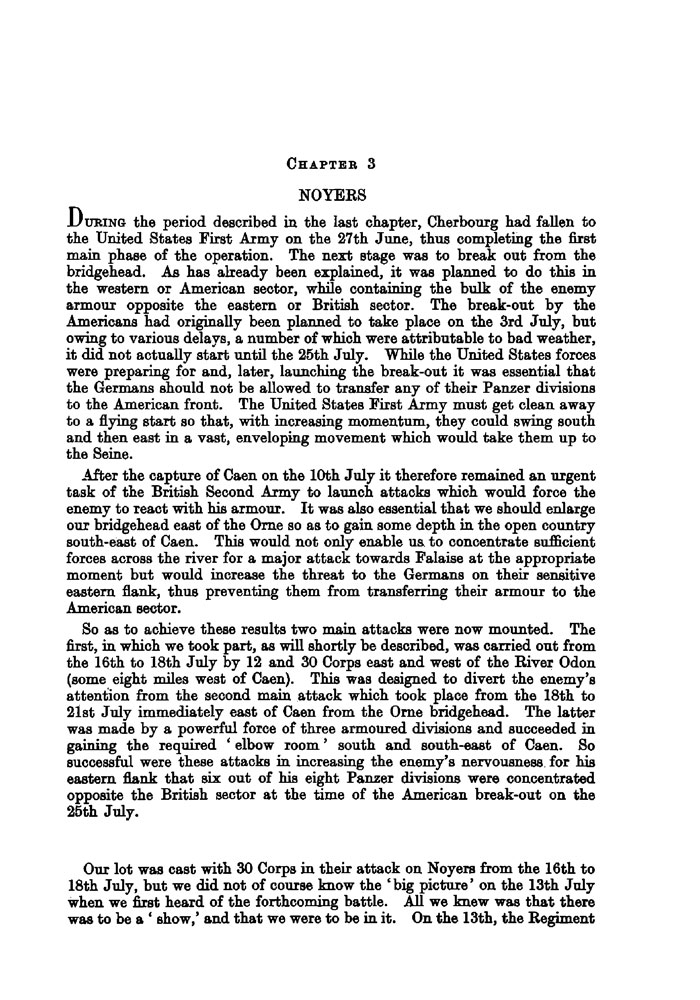
During this assault on Noyers-Bocage, 144 RAC supported the 59th (Staffordshire) Infantry Division. Progress proved slow and costly, with dense minefields,laid by both German and Allied forces,inflicting heavy losses. Twenty tanks were disabled by mines and a further five destroyed in combat. Although the Germans retained most of the village, “A” Squadron succeeded in securing the railway station.
Operation Totalize (August 1944)
As part of the 33rd Armoured Brigade, the regiment supported the 51st (Highland) Infantry Division in a major night offensive designed to break through the German line south of Caen and advance toward Falaise. The operation was notable for the pioneering deployment of “Kangaroo” armoured personnel carriers,converted self-propelled guns used to transport infantry under armour alongside the tanks.
Operation Astonia: The Capture of Le Havre (September 1944)
In the assault on the heavily defended port of Le Havre, the regiment worked closely with the 153rd (Highland) Brigade. The attack relied heavily on specialist armoured vehicles,so-called “funnies”including flail tanks for mine clearance and bridging tanks to cross antitank obstacles. The operation concluded with the successful capture of the port.
Operation Plunder: The Rhine Crossing (March 1945)
By the time of the Allied crossing of the River Rhine, the unit had been redesignated as the 4th Royal Tank Regiment. Re-equipped with amphibious Buffalo LVT vehicles, it ferried elements of the 51st Highland Division across the river on the night of 23–24 March. In a symbolic gesture linking past and present, Jolly planted the First World War standard of 4 RTR on the far bank,the first British tank regiment to carry its colours across the Rhine since 1918.
The Final Advance: Bremen (April 1945)
The regiment’s last major engagement was the capture of Bremen during the final Allied advance into northern Germany. By the time of the German surrender in May 1945, the formation had evolved from a conventional tank support unit into a highly adaptable force capable of specialised amphibious operations
Additional information
| Author/Editor | Alan Jolly |
|---|---|
| Product Code | 32517 |
| Delivery | Usually despatched within 14 Days |
| Format | 2026 N&MP reprint (of original pub 1952). xvi+168pp.,with 11 Illustrations & 13 maps |
| ISBN | 9781474542876 |
| Condition | New |
|---|
You may also like…


