





ARMY MEDICAL SERVICES: CAMPAIGNS VOL V Burma Official History of the Second World War
Price range: £17.99 through £38.00
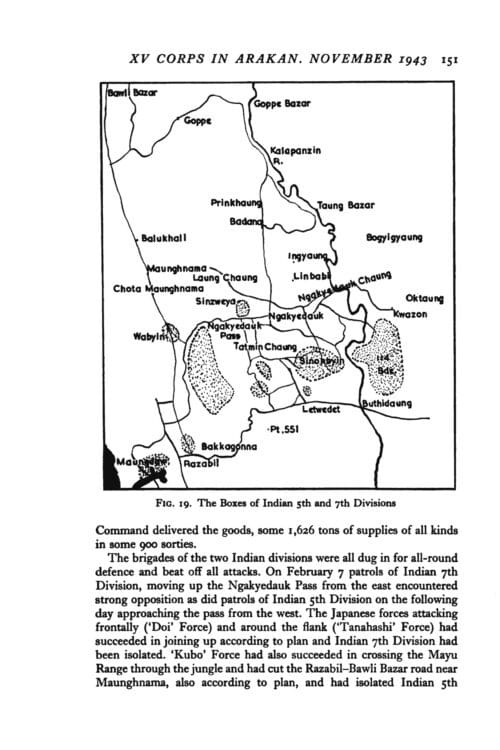
The fifth and concluding volume of the official history of the British military medical services in the Second World. In this epic story is shown how the differences in respect of the efficiency and attitudes of the British-Indian and Japanese Medical Services accounted largely for the Allied victory and the Japanese defeat. This work has much of value, with photos and maps, and detailed coverage from the Japanese invasion to the re-occupation of Japanese-held territories.
Description
The fifth and concluding volume of the official history of the British military medical services in the Second World. In this epic story is shown how the differences in respect of the efficiency and attitudes of the British-Indian and Japanese Medical Services accounted largely for the Allied victory and the Japanese defeat. This work has much of value, with photos and maps, and detailed coverage from the Japanese invasion to the re-occupation of Japanese-held territories.
On three occasions prior to the Second World War, British servicemen were called upon to fight in Burma. Of the first (1824-1826), Captain Marryat, the novelist who commanded the naval forces, recorded the ravages inflicted by disease – cholera, dysentery, scurvy and malaria. The Second Burmese War, which lasted from 1852 to 1853, arose from interference with the rights of British merchants trading in Burmese ports that had been guaranteed by the Treaty of Yandalu. Disease in the British forces was less serious owing to the shorter period of the campaign. The Third Burmese War arose in 1885 through King Thibaw Min’s arbitrary exaction of monopolies from English traders.
Privations, disease and discomforts had to be endured again in the Burma campaign – one of the most arduous of the Second World War. The climate was hostile, roads were practically non-existent and much depended upon the air. The contributions of the RAF and the USAAF were of astonishing magnitude. The evacuation of casualties was a herculean task and improvisation rose to heights hitherto unimagined. The wounded and sick had to be transported by native bearers through trackless jungle, down precipitous heights, conveyed on mules across country, in sampans, rafts and boats, in jeeps and ambulances to airstrips, whence they were conveyed by air to hospitals. Enterprises such as Wingate’s incursions entailed special difficulties of this kind for the Medical Services. Heroic measures saved countless lives.
Much detail on many actions, including the following:
The Action near the Kawkareik Pass, The Loss of Moulmein, The Action on the Bilin River and the Disaster on the Sittang River, The Loss of Toungoo and Prome, The Loss of the Oilfields, The Withdrawal from Arakan, The Assaults upon the Japanese Positions at Donbaik and Rathedaung and the Japanese Counter-Offensive, The Siege of Kohima, The Advance of 2nd Division from Dimapur to Kohima, The Capture of Tamu, The Advance to Tiddim and Kalemyo, The Advance of Indian 5th Division.
Additional information
| Author/Editor | F A Crew |
|---|---|
| Product Code | 31686 |
| Delivery | Usually despatched within 14 Days |
| Format | 2024 N&M Press reprint (original pub 1966). xlvi+654 pp+ plates,sketch maps & diagrams, & 12 tables |
| ISBN | 9781474540476 |
You may also like…


