
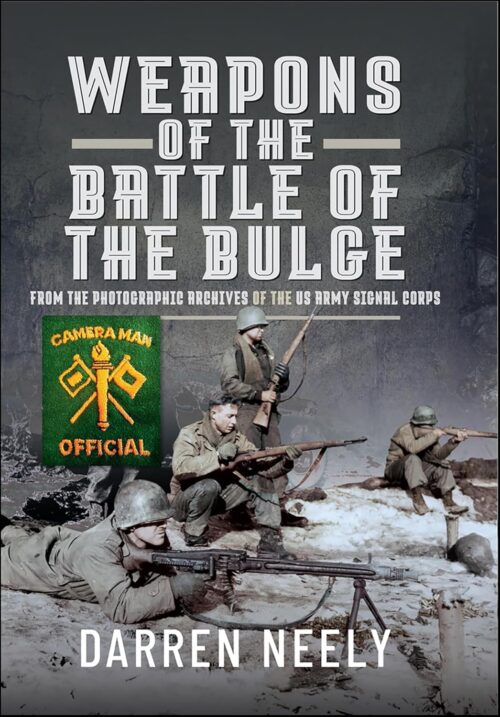
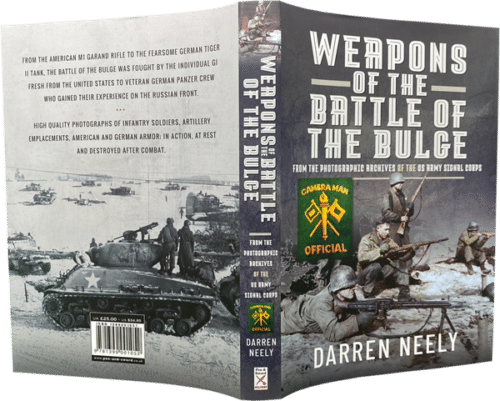
WEAPONS OF THE BATTLE OF THE BULGE From the Photographic Archives of the US Army Signal Corps
Original price was: £25.00.£11.99Current price is: £11.99.
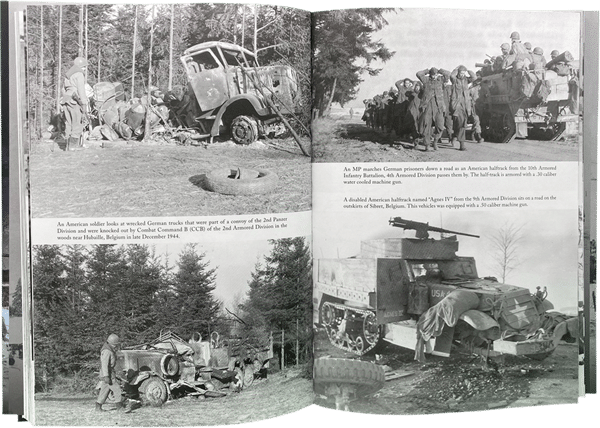
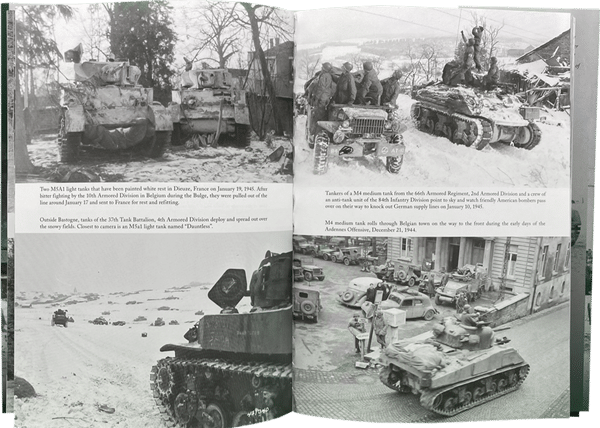
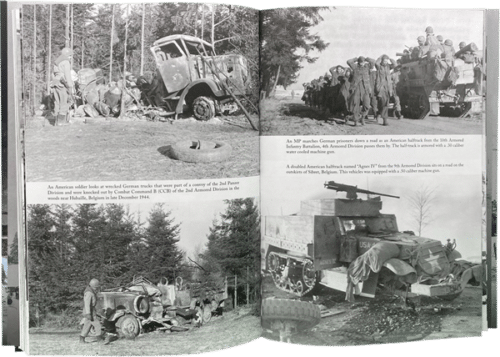
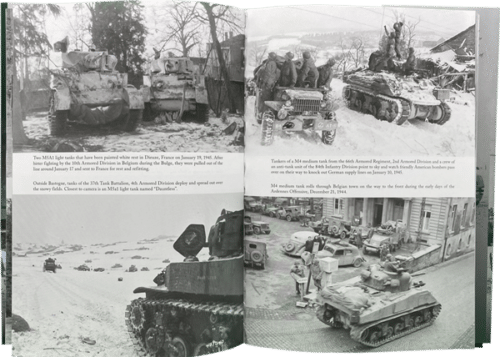
While some images are familiar from other Battle of the Bulge titles, this volume offers a trove of lesser-known photos—many sharply captioned and high in detail on U.S. and German armour, artillery, and vehicles. Several graphic, likely unpublished images add extra impact. A strong addition to any Bulge collection.
Only 13 left in stock
Description
The Battle of the Bulge—formally known as the Ardennes Offensive—was the final major German offensive conducted on the Western Front during the Second World War. Fought between 16 December 1944 and 25 January 1945, the operation sought to exploit the difficult terrain of the densely forested Ardennes region in Belgium and Luxembourg, with German armoured formations, including units equipped with the formidable Tiger tank, spearheading the attack. Although the offensive initially achieved tactical surprise and recorded several early gains, German forces ultimately failed to regain the strategic initiative. Once weather conditions improved, Allied air power and co-ordinated ground operations enabled American, British, and Canadian forces to halt the advance and restore the front to its previous lines.
As with many engagements of the Second World War, the outcome in the Ardennes was determined not only by armoured and mechanised forces but by the infantryman and his supporting weapons: rifles, machine guns, mortars, and other close-support systems. This volume examines the full spectrum of weaponry employed by both sides during the battle, ranging from small arms and heavy machine guns to mortars, artillery, armoured cars, self-propelled guns, and tanks. Weapons of the Battle of the Bulge demonstrates how the co-ordinated employment of these weapons shaped the conduct of the campaign and contributed to the eventual Allied victory.
Additional information
| Author/Editor | Darren Neely |
|---|---|
| Product Code | 32323 |
| Delivery | This item is usually dispatched Next Day |
| Format | Hardback 309 pages illustrated throughout |
| ISBN | 9781399001052 |
| Condition | New |
|---|
You may also like…