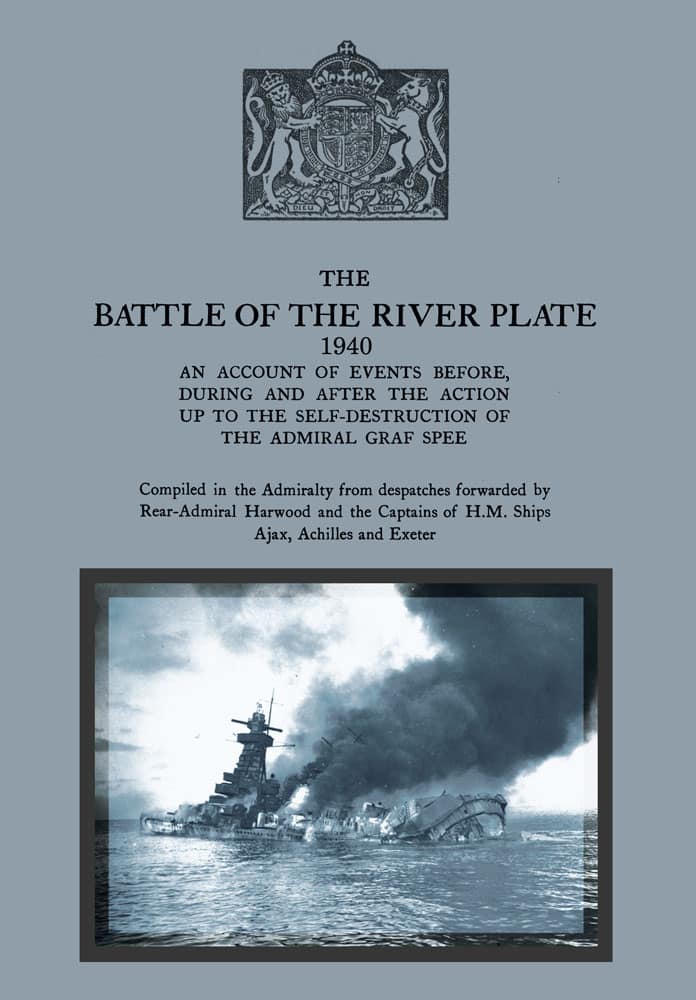
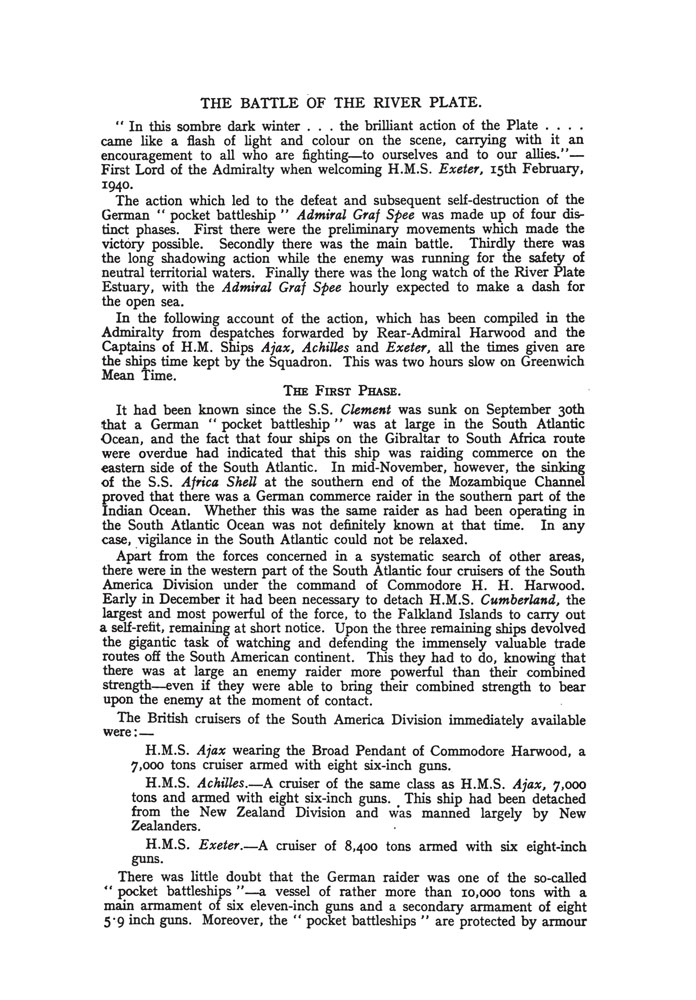
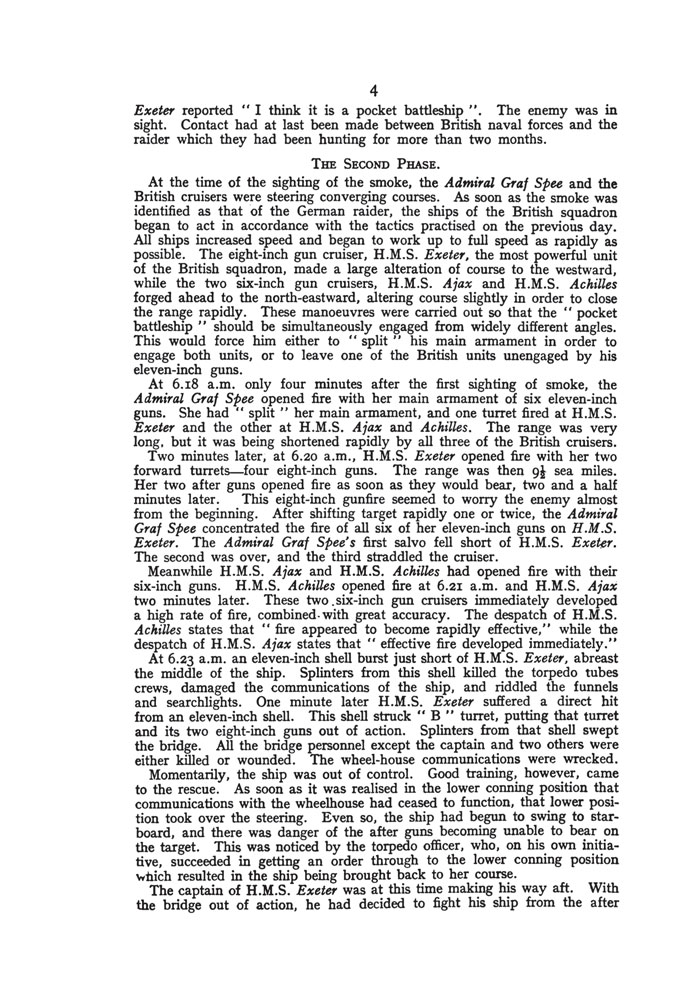
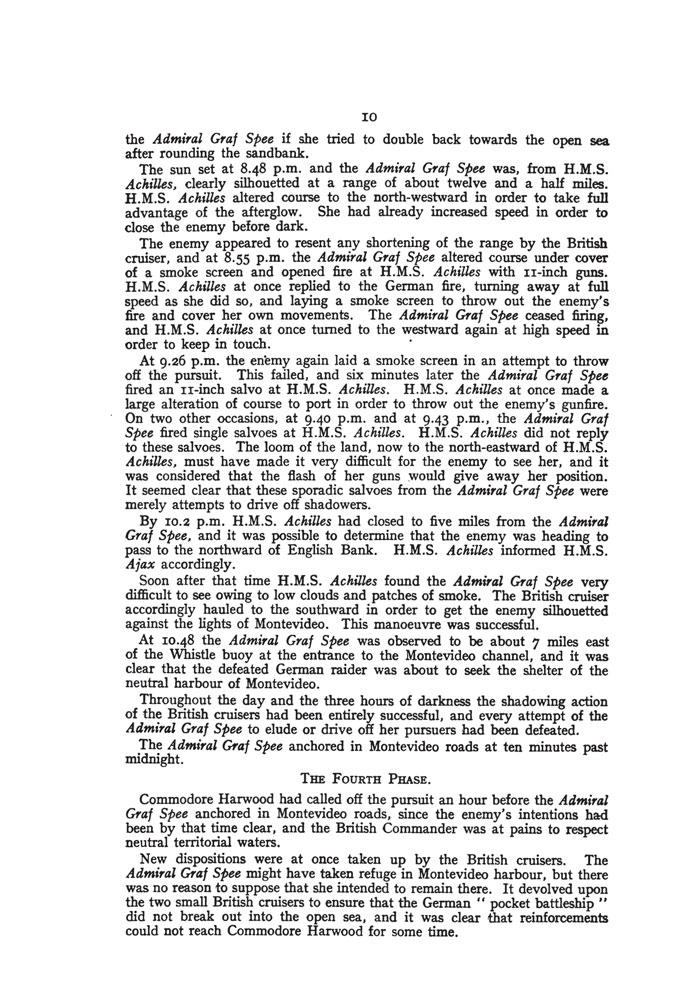
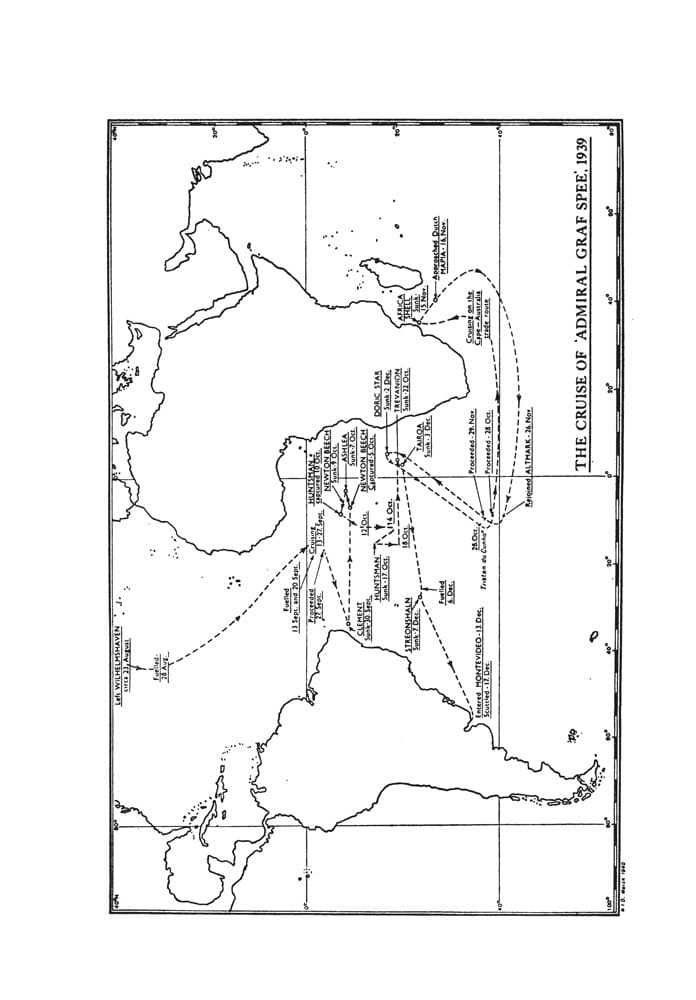
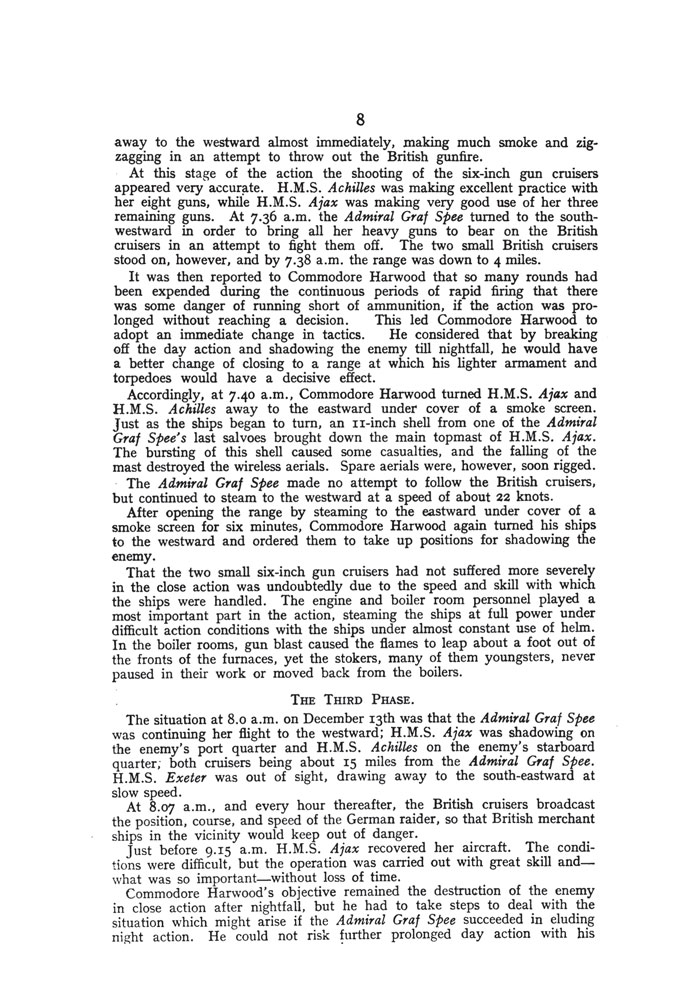
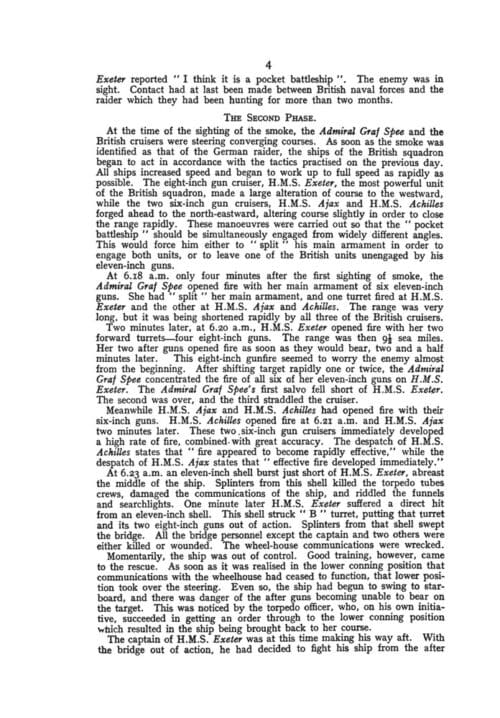
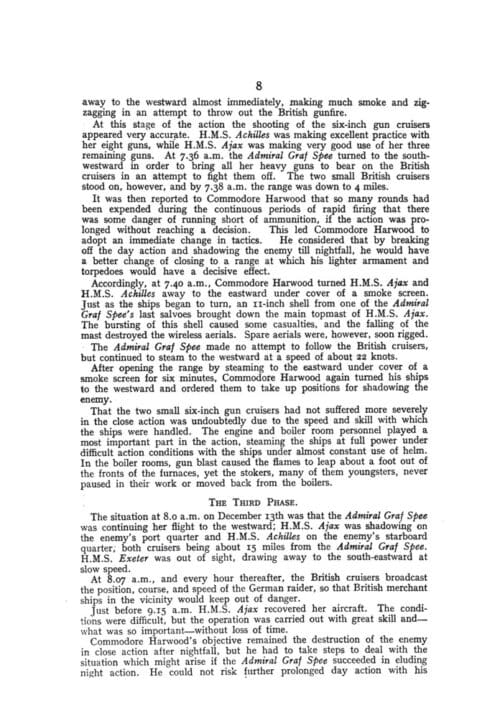
On 13 December 1939, the South Atlantic witnessed the Royal Navy’s first major clash of World War II at the Battle of the River Plate. The German heavy cruiser Admiral Graf Spee, commanded by Captain Hans Langsdorff, engaged a British squadron under Commodore Henry Harwood—HMS Exeter, Ajax, and HMNZS Achilles. Having begun commerce raiding in September, Graf Spee was intercepted off the RÃo de la Plata.
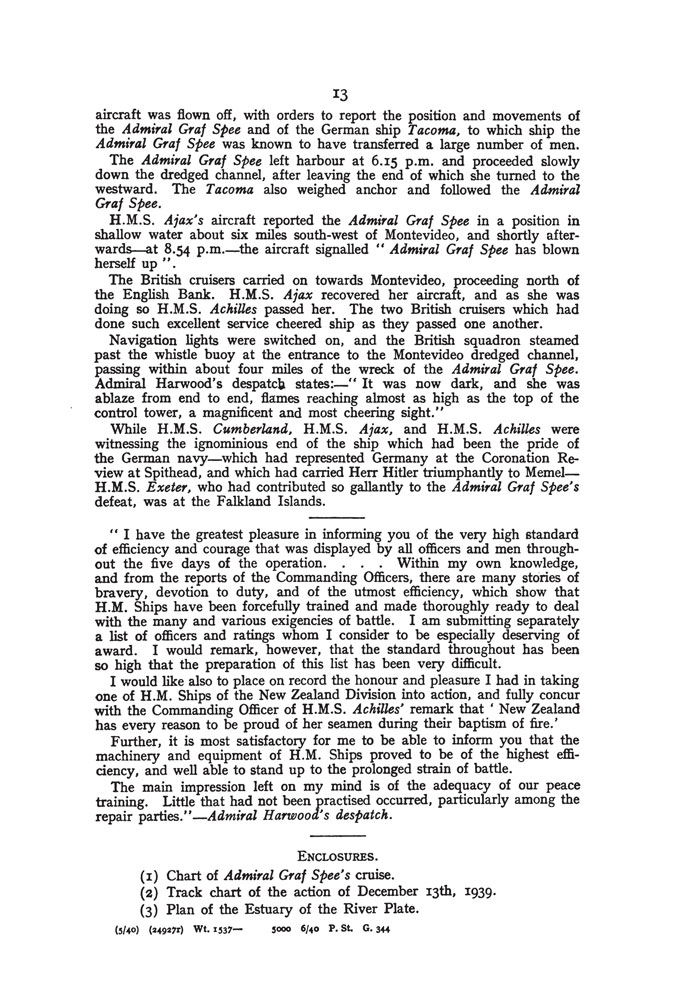
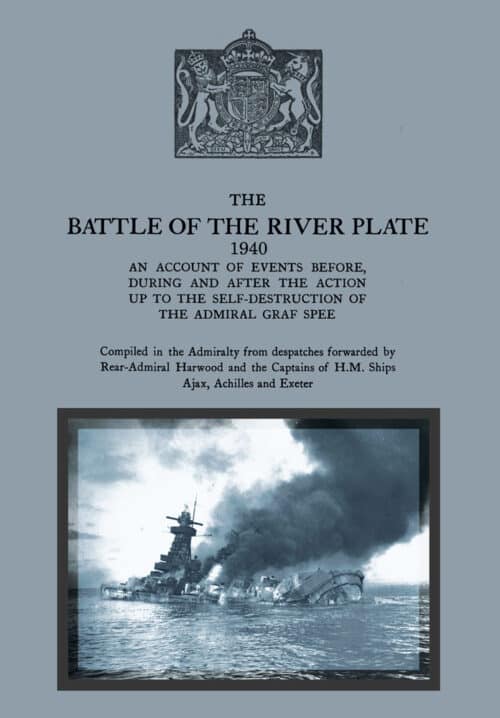
Exeter was heavily damaged and forced to withdraw; Ajax and Achilles shadowed the crippled German ship until she entered neutral Montevideo. Believing overwhelming British forces lay in wait, Langsdorff scuttled Graf Spee on 17 December and subsequently took his own life.
This engagement highlighted the deadly stakes of naval warfare, where hundreds of Royal Navy ships were lost or damaged to enemy action, from U-boats to aircraft and mines, across the globe.
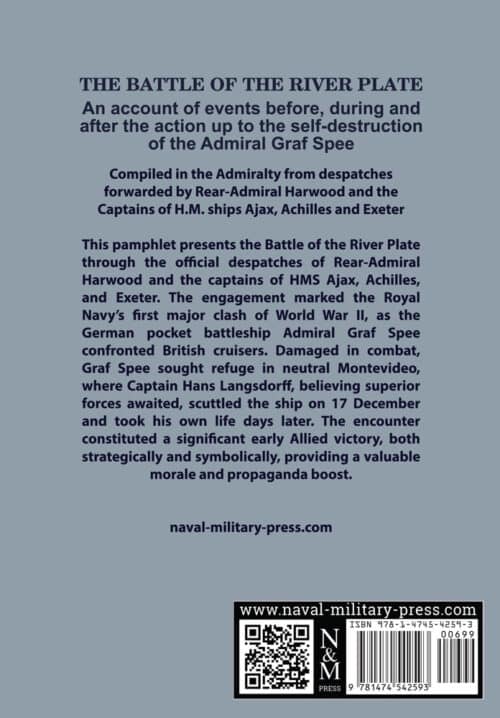
THE BATTLE OF THE RIVER PLATE An account of events before, during and after the action up to the self-destruction of the Admiral Graf Spee
£6.99
This pamphlet presents the Battle of the River Plate through the official despatches of Rear-Admiral Harwood and the captains of HMS Ajax, Achilles, and Exeter. The engagement marked the Royal Navy’s first major clash of World War II, as the German pocket battleship Admiral Graf Spee confronted British cruisers. Damaged in combat, Graf Spee sought refuge in neutral Montevideo, where Captain Hans Langsdorff, believing superior forces awaited, scuttled the ship on 17 December and took his own life days later. The encounter constituted a significant early Allied victory, both strategically and symbolically, providing a valuable morale and propaganda boost.


