


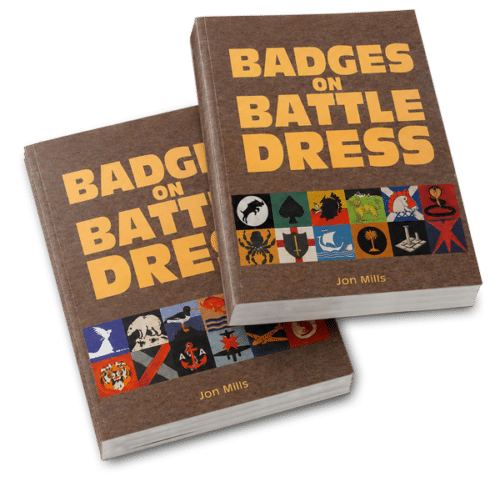





BADGES ON BATTLE DRESS An Illustrated History of the Cloth Insignia Worn on Khaki and Jungle Green by Britain’s Armed Forces 1939 to 1967
Price range: £125.00 through £165.00
This is a detailed exploration of the cloth insignia worn by Britain’s armed forces from the early 20th century through the 1960s. The book traces the development of these badges from their introduction on khaki service dress to their widespread use during the World Wars and beyond.
It examines how insignia evolved alongside modern warfare, being adopted not only by British troops but also by Commonwealth forces, Allied soldiers, and civilians attached to military operations. Covering major campaigns across Europe, the Middle East, and Asia, it provides insight into the role badges played in identifying rank, trade, and unit.
With extensive research drawn from official records, the work documents a wide variety of insignia, including rank markings, proficiency badges, and regimental flashes, offering a comprehensive look at an important but often overlooked aspect of military history.
Description
Extensively researched from official records Badges on Battle Dress is the first comprehensive history of the vast range of cloth badges that decorated the rough serge suit worn as the British Army’s main uniform for more than twenty years. It explains the origins of these badges from their adoption for khaki service dress in 1902 and their development and wider introduction in the First World War. Kept alive between the wars by the Territorial Army, they were widely worn after the introduction of battle dress in 1939, their use subsequently extended to the khaki drill and jungle green uniforms worn overseas.
In wartime these cloth badges were gradually adopted by the soldiers of the Empire and Commonwealth, the troops of the Allied Nations who fought alongside them and the many civilians in battle dress who accompanied the armed forces overseas – from War Correspondents to ENSA artistes, Scripture Readers to NAAFI. The demands of modern war and new arms of the services brought new insignia for the Airborne Forces, Commandos, the Royal Navy, Royal Marines and Royal Air Force. Retained in the post-war Army, its ranks much enlarged by National Servicemen, battle dress and the numerous badges worn on it survived until the arrival of combat suits and No 2 Dress in the 1960s.
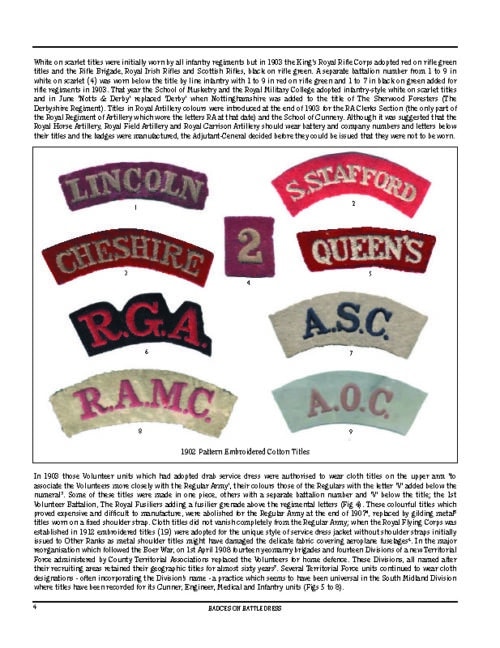
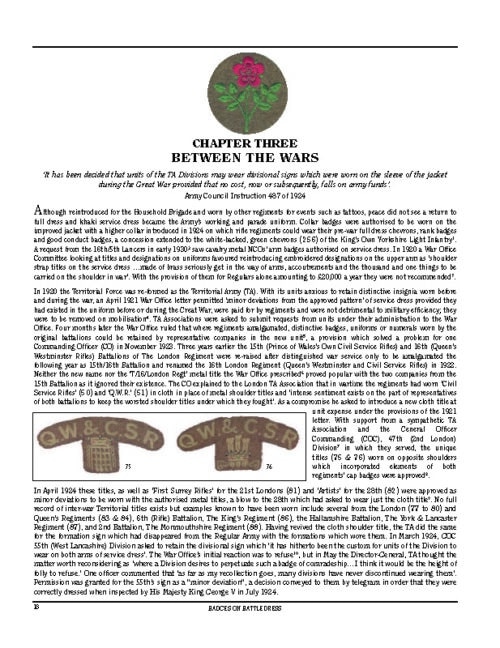
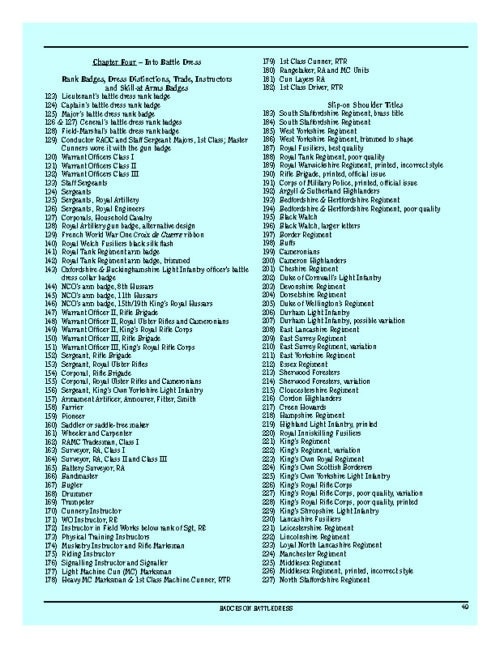
In forty chapters and two volumes Badges on Battle Dress covers the insignia worn in the main wartime and post-war campaigns – the BEF in 1940, the Desert Campaign, Europe after D-Day, the Far East, Palestine, Korea and Malaya – and the many servicemen stationed with the British Army of the Rhine. It details and illustrates rank badges, trade and proficiency badges and includes the first ever listing of wartime cloth regimental flashes based on information drawn from unpublished wartime records.
Compiled with the assistance of collectors worldwide the 1,200 pages of Badges on Battle Dress are illustrated with over 5,000 original badges and more than 500 contemporary photographs of them being worn and provide an essential guide to a subject not previously explored in depth. Described in a Foreword by General The Lord Dannatt, Chief of the General Staff from 2006 to 2009 as ‘a masterpiece’
Additional information
| Author/Editor | Jon Mills |
|---|---|
| Product Code | 32546 |
| Delivery | Usually despatched Next Day |
| Format | 2 Volumes 648 pages and 630 pages. Dimensions : 21.59 x 3.51 x 27.94 cm |
| ISBN | 9781474543057 |
| Condition | New |
|---|
You may also like…


